Goal
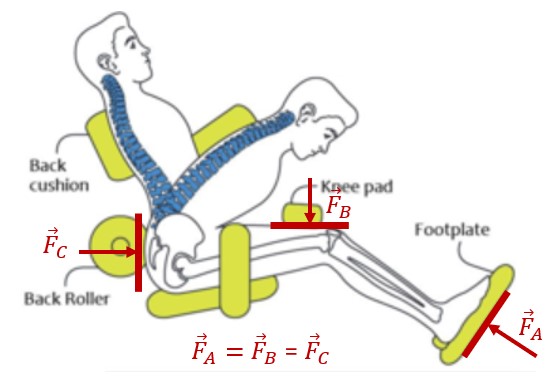
As described in science, the exercise device must achieve the following:- Fixation from the pelvis downwards via tensioning mechanism.
- Rotatable cushion on the pelvis.
- Training weight pushing against the back.
Personal test result
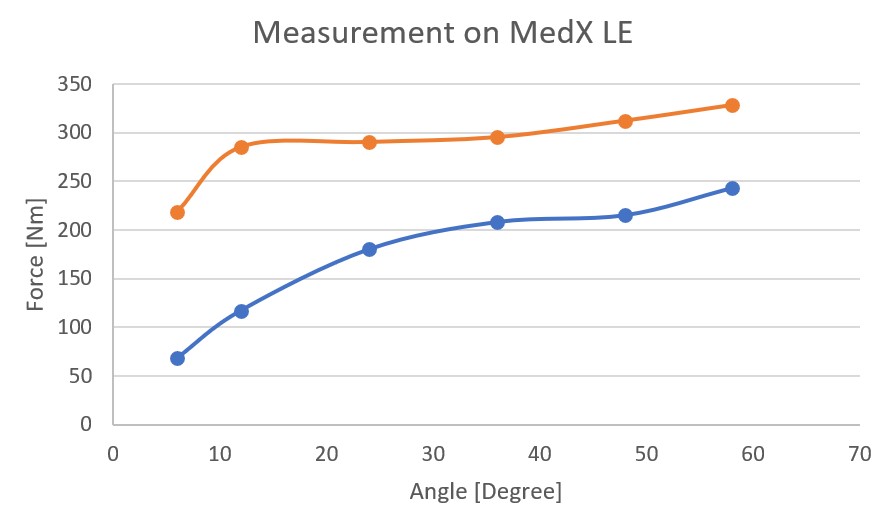
After training on the prototype, my lumbar-extension torque measured higher on a MedX device at every tested angle; the increase exceeded 100% at the most extended position. This is a single-person before-and-after observation, not evidence of clinical effectiveness. The result may reflect training, test familiarization, effort, setup differences and normal measurement variation. It does not show which individual muscles produced the change or prove that the prototype reduced my pain.
Frame
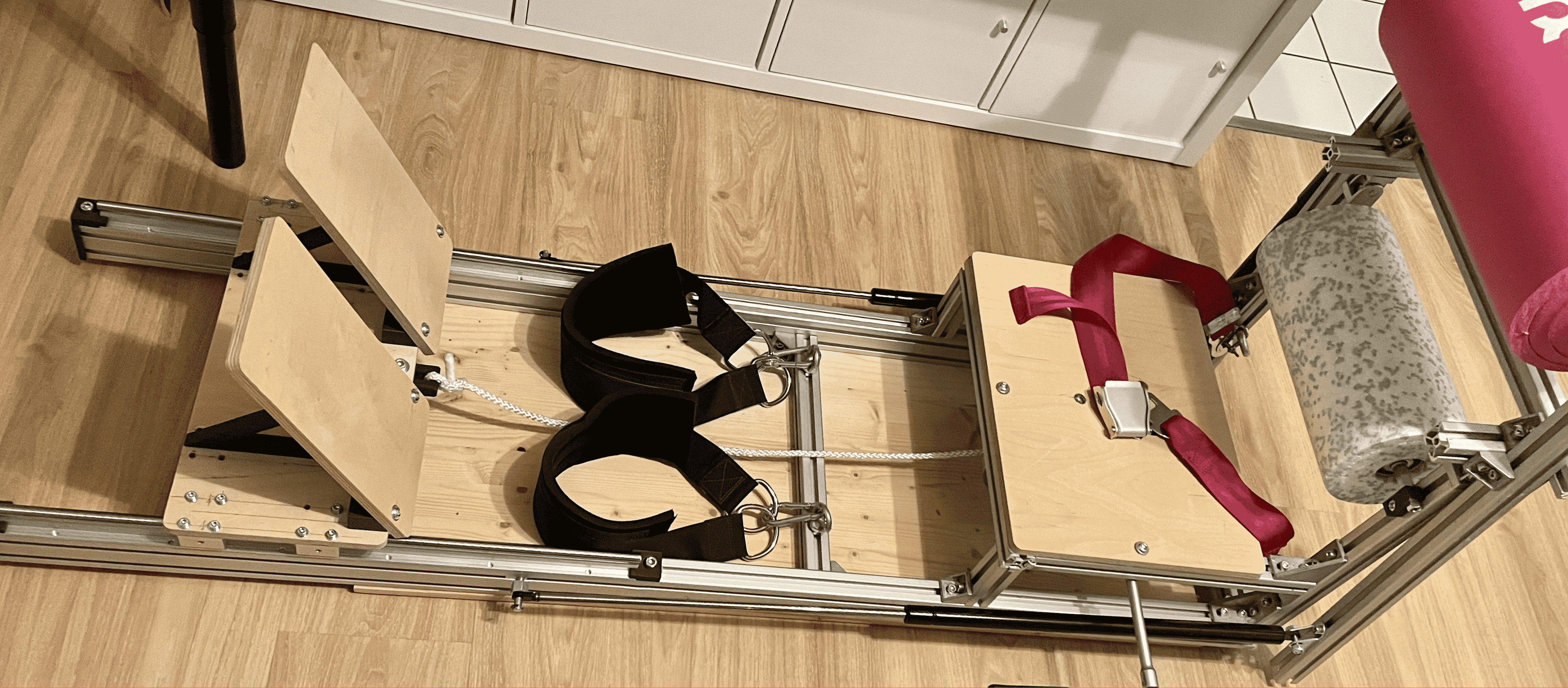
The frame consists of aluminum profiles with standard connectors. For the seat a wooden plate is screwed onto an aluminum plate.
Foot unit
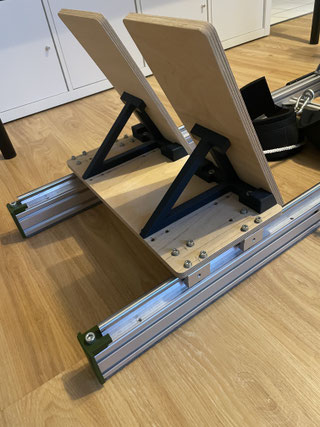
The foot unit is mounted on SBR12 linear guides. The attachments for the footrests are 3D printed.
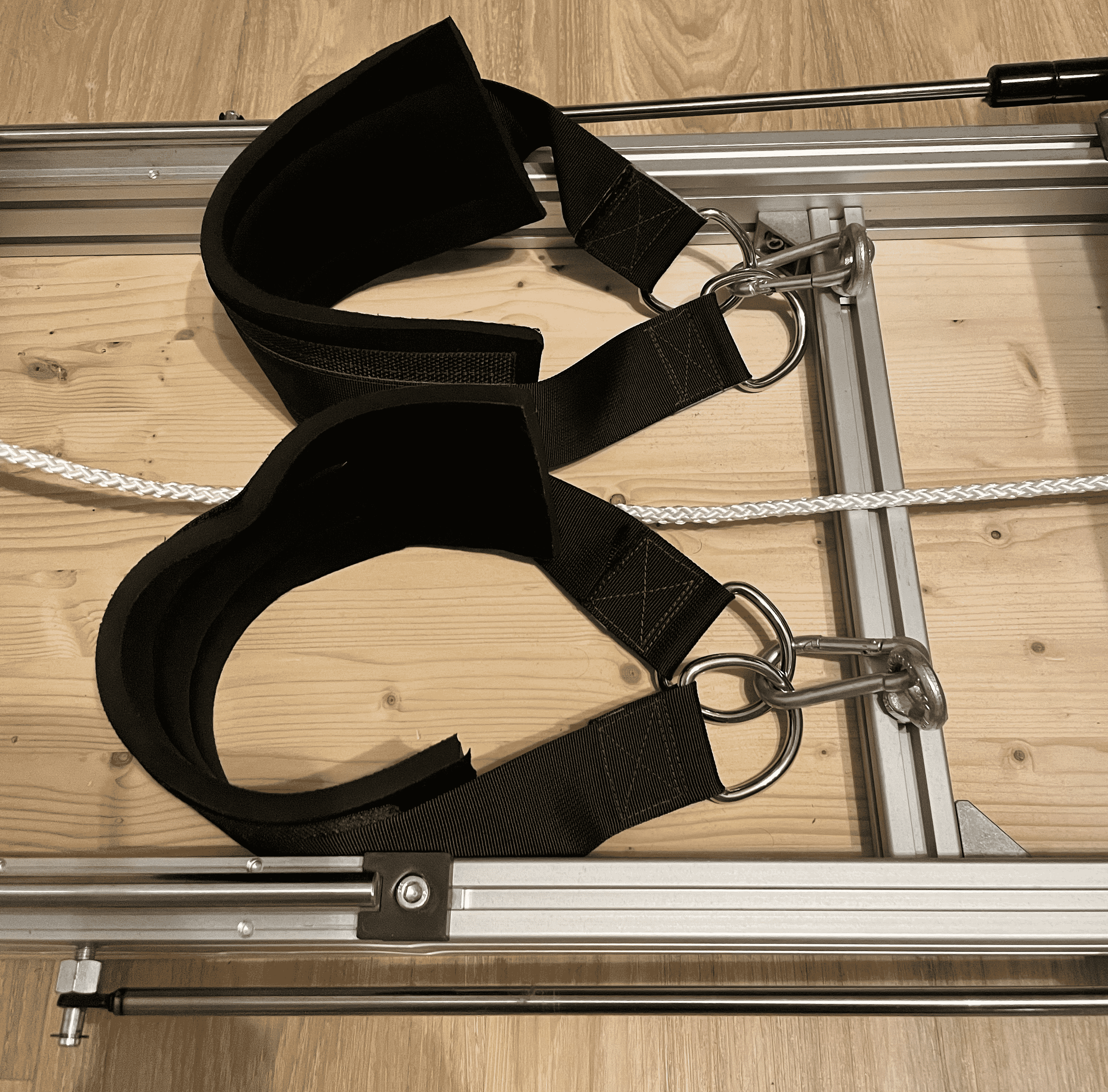
Leg unit
Two straps with thick neoprene fabric prevent the feet from being pushed upwards in the knee area.
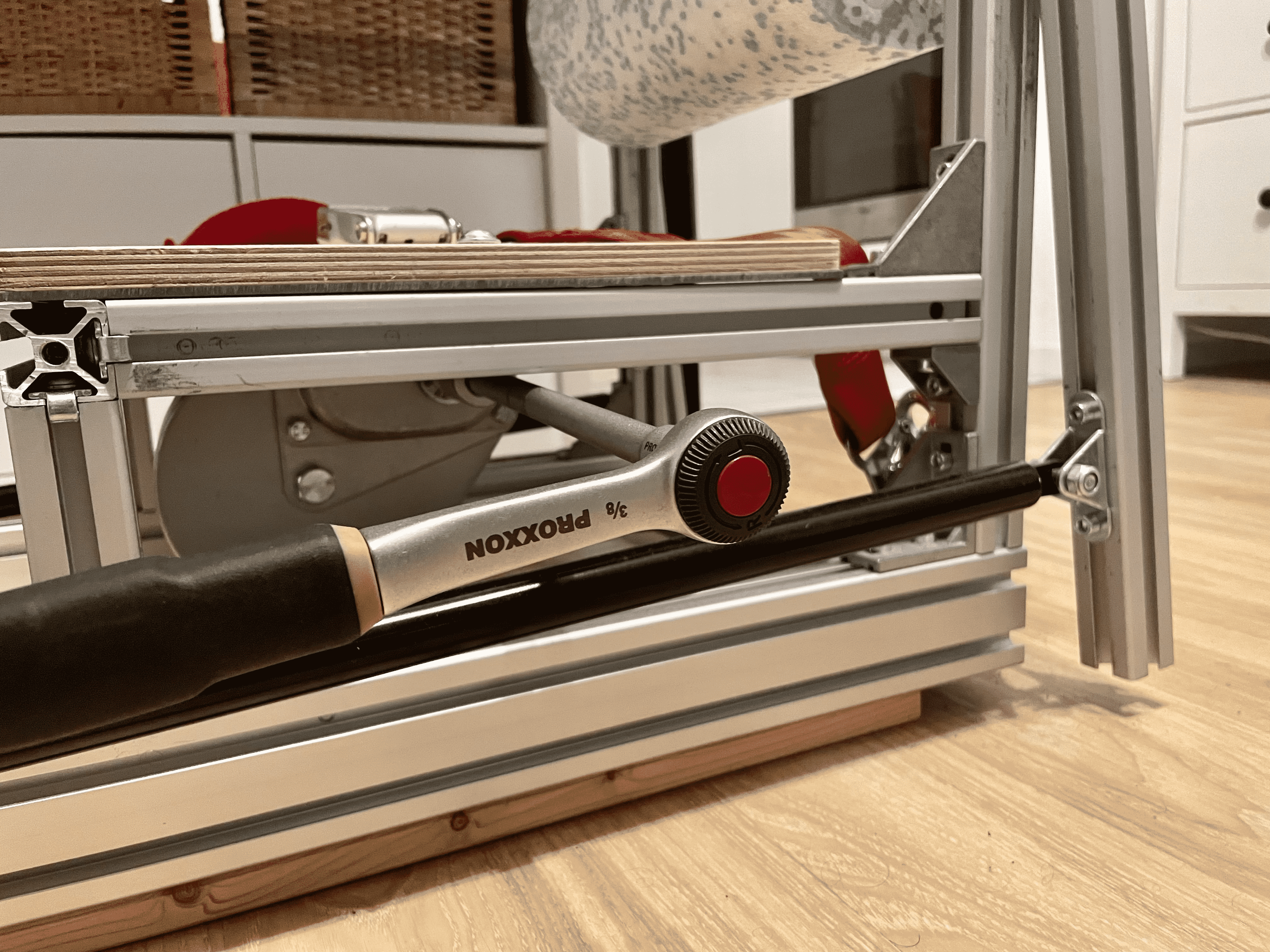
Clamping force
A hand winch with automatic load brake is mounted under the seat. A ratched is used to tighten or loosen the tension. It must be removed during exercise.
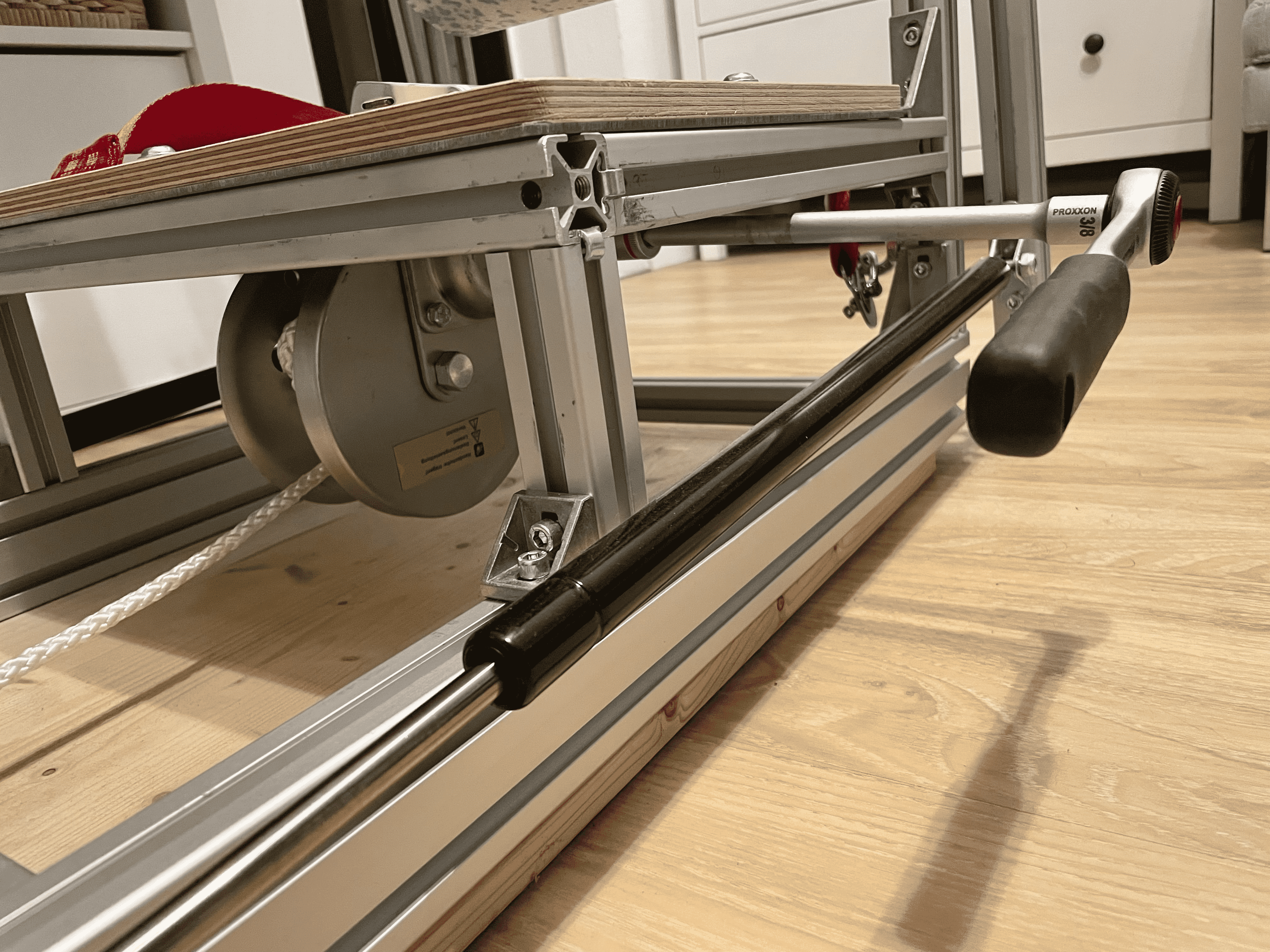
Training weight
Two gas pressure springs (150N each) are tensioned/relaxed using a lever principle when pressing the back against the back unit. The force can be varied by changing the lever length.
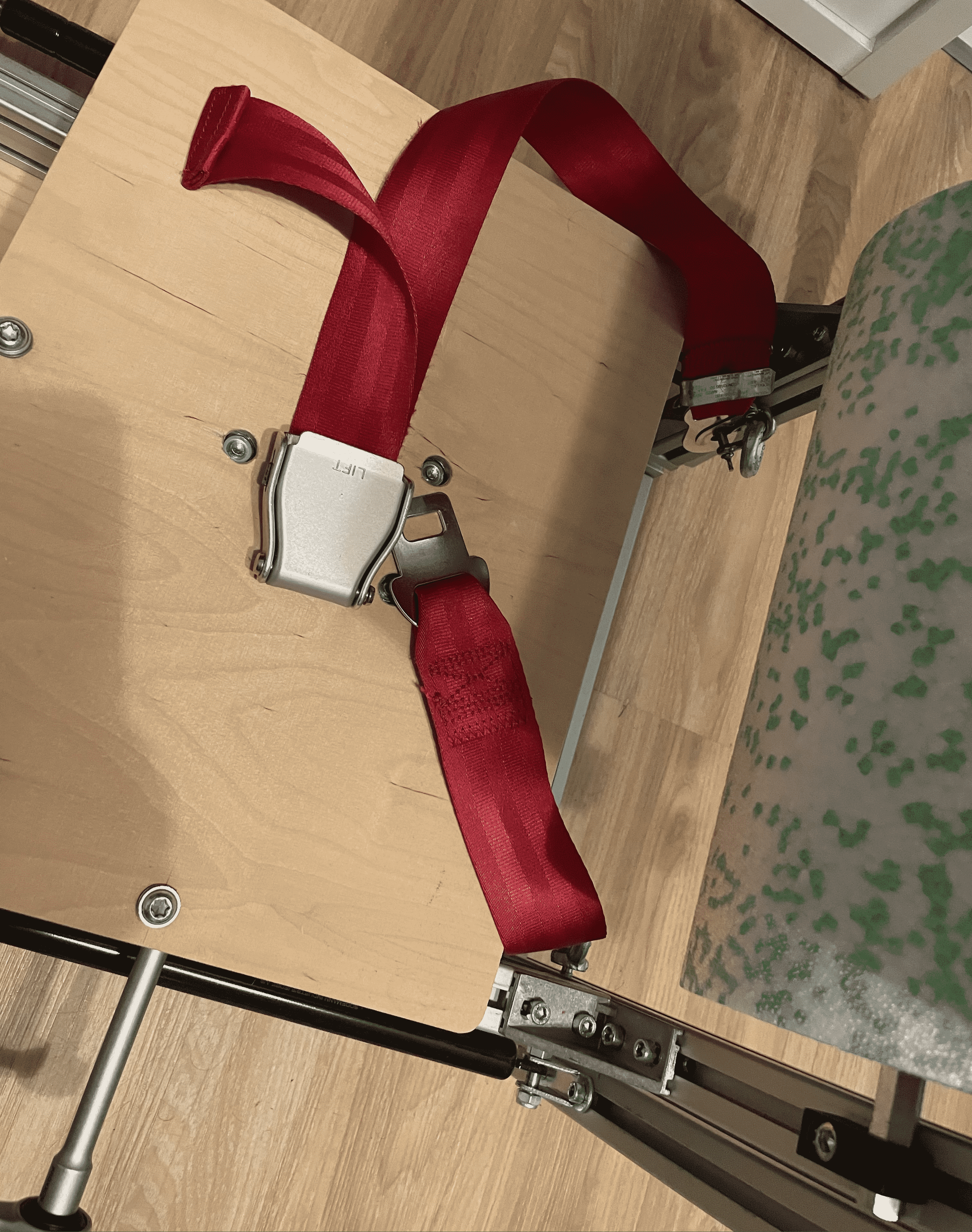
Additional stabilization
An airplane seat belt also helps to fixate the pelvis.
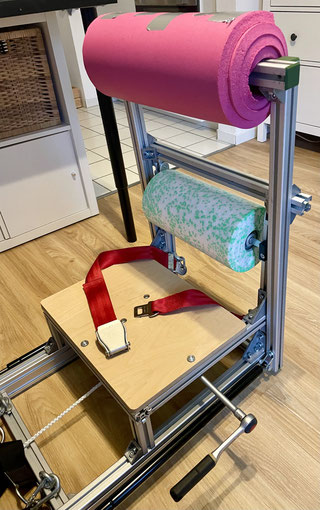
Rotating unit
The tension force presses the pelvis against a rotatably mounted fascia roller. The roller provides a visible indication of pelvic movement: rotation suggests that the intended stabilization has not been achieved. A stationary roller does not prove that the multifidus is isolated or reveal how force is distributed among the lumbar extensor muscles. A rolled-up yoga mat serves as a back cushion.
Safety and evidence status
This prototype is experimental. It has not been clinically validated, independently safety-tested or certified as a medical device, and the information on this site is not medical advice. Loaded spinal exercise is not appropriate for everyone. Do not use an experimental device as a substitute for assessment or supervised rehabilitation by a qualified professional.
Seek prompt medical assessment for back pain accompanied by new bowel or bladder problems, saddle numbness, progressive leg weakness, fever, unexplained weight loss, major trauma or a history of cancer.